English @ All Saints
Reading
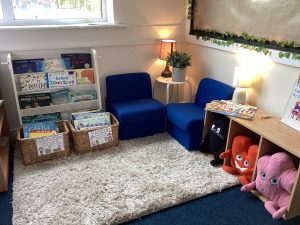
Reading is at the heart of the curriculum at All Saints Primary School; teaching a child to read is the greatest gift that we can give a child in our school. Our classroom environments are rich with high quality literature for the children to enjoy. At the heart of our school we have a Library that our children regularly visit to enjoy the wide range of fiction and non-fiction texts we have. From Early Years to Year 6, we ensure that our children not only learn the skills and knowledge to enable them to read, but also to develop positive life-long dispositions and attitudes towards reading – that will take our children through secondary school and into adulthood.
Our reading curriculum in the Early Years and Key Stage One focuses on teaching the children to decode (word recognition). Teaching the children to hear, identify and use different sounds that distinguish one word from another enables our children to begin the reading process in its early stages. We use the ‘Little Wandle Letters and Sounds Revised’ scheme of learning to deliver our phonics teaching in our school. More information can be found using the link below.
Little Wandle Letters and Sounds Revised
The reading curriculum is deliberately designed to be ambitious and aspirational, ensuring that every child leaves our school as a competent, confident reader. Drawing on the latest research around explicit vocabulary instruction, reading fluency and key comprehension strategies, this curriculum is a synthesis of what we know works in helping children make outstanding progress in reading and a distillation into consistent, well-structured practice. The clear structure and principles ensure that teaching is progressive, challenging and engaging and the rich, diverse literature spine acts as both a mirror so that every child can see themselves in the core texts and as a mirror to engage pupils with experiences beyond their own field of reference.
We know that reading at home is equally as important as reading in school. We encourage our pupils and parents to share books together as regularly as possible. All children in KS1 are provided with a Big Cat reading book to take home and read alongside a library book. Depending on the child’s phonic ability, each child in KS2 is either provided with a Big Cat reading book or a book from the school library. The books provided are fully decodable and are matched with the phonic ability of the reader.
Writing
At All Saints all of our children, irrespective of background or ability, will become effective and enthusiastic writers; to be able to write with grammatical accuracy; with appropriate style and flair; with an awareness of the reader; and, to be able to write at length, within whichever genre they choose to express themselves – today, tomorrow and in the many years ahead.
The journey to being an effective writer begins in Nursery at All Saints. We fully understand that before our children can be expected to pick up a pencil and engage in refined fine motor tasks, they must first become confident and proficient in whole body, gross motor movements; running, jumping, climbing, crawling – the fundamental movement skills. The journey to the page begins in our carefully designed, physically enabling Early Years environments, where our children are encouraged to learn through movement; the physical language of learning.
Throughout Nursery and Reception children learn through carefully considered play opportunities that foster purposeful and progressive social interaction and ultimately, language; the next step in writing development. Before children can write, they must talk. At All Saints we foster a language rich provision, where all adults’ model ‘talk’, recognising that immersing our children in language is a key step on the road to developing our young writers.
As our children develop their ability to make marks on the page and to ascribe meaning to those marks, phonics teaching then leads the way for the next part of the writing journey. Teachers in Early Years and KS1, model daily how to write (and read) different letters and sounds, building up to increasingly complex words, captions, sentences and beyond.
Our English curriculum has reading at the heart of it, and writing is taught through carefully selected texts that motivate and inspire our children to pick up a pencil and get involved. Writing takes place on a daily basis, with children engaging in small writing activities at the beginning of a new unit of work, rehearsing new content and being guided to assess their own competency. As the unit progresses children are challenged to write at length demonstrating the key skills modelled and discussed during lessons. Their work is assessed each day and children are given personalised next steps tasks to address, enabling them to make constant progress.
From year 1 through to year 6, a piece of independent writing is assessed at the end of each unit of work (typically 2-3 weeks) and at the end of each half term. Teachers use carefully selected criteria to determine each child’s current levels of ability and award each piece of writing a score. This then enables us to track each child’s individual progress, and offer further challenge or support where necessary. Writing judgements are regularly moderated at All Saints to ensure the very highest standards of accuracy.
Handwriting is taught using the programme, Letter-Join. Pupils learn pre-cursive handwriting in Year 1 moving to cursive handwriting in Year 2. In Key Stage 2, pupils continue to develop their speed, fluency and presentation of handwriting. Our children are taught to write letters, instructions, reports, recounts, lists, diaries, notes; they are taught to use pencils, pens, keyboards, touchscreens – all in a bid to motivate them, and inspire them to write across the curriculum.
Oracy
At our school, we believe that strong speaking and listening skills are essential for every child’s learning and confidence. Through our oracy curriculum, pupils are taught how to express their ideas clearly, listen carefully to others, take part in discussions, and communicate with confidence in a range of situations. We create a supportive environment where every child’s voice is valued, helping them develop the skills they need to succeed both in the classroom and beyond.
Oracy also plays a vital role in developing high-quality writing. By discussing ideas, exploring vocabulary, and rehearsing sentences aloud, children strengthen their ability to organise their thoughts and express them effectively on the page. Strong oral language skills lead to clearer, more confident and more creative writing across the curriculum.
The National Curriculum for English aims to ensure that all pupils:
- read easily, fluently and with good understanding
- develop the habit of reading widely and often, for both pleasure and information
- acquire a wide vocabulary, an understanding of grammar and knowledge of linguistic conventions for reading, writing and spoken language
- appreciate our rich and varied literary heritage
- write clearly, accurately and coherently, adapting their language and style in and for a range of contexts, purposes and audiences
- use discussion in order to learn; they should be able to elaborate and explain clearly their understanding and ideas
- are competent in the arts of speaking and listening, making formal presentations, demonstrating to others and participating in debate
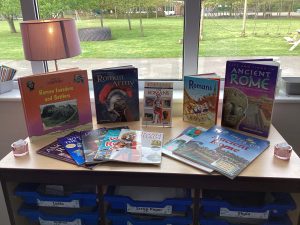
- Recommended Reads at All Saints